
The Hypocrisy of “Maximalism for Work”
Attention Is Cheap. Authority Is Not.
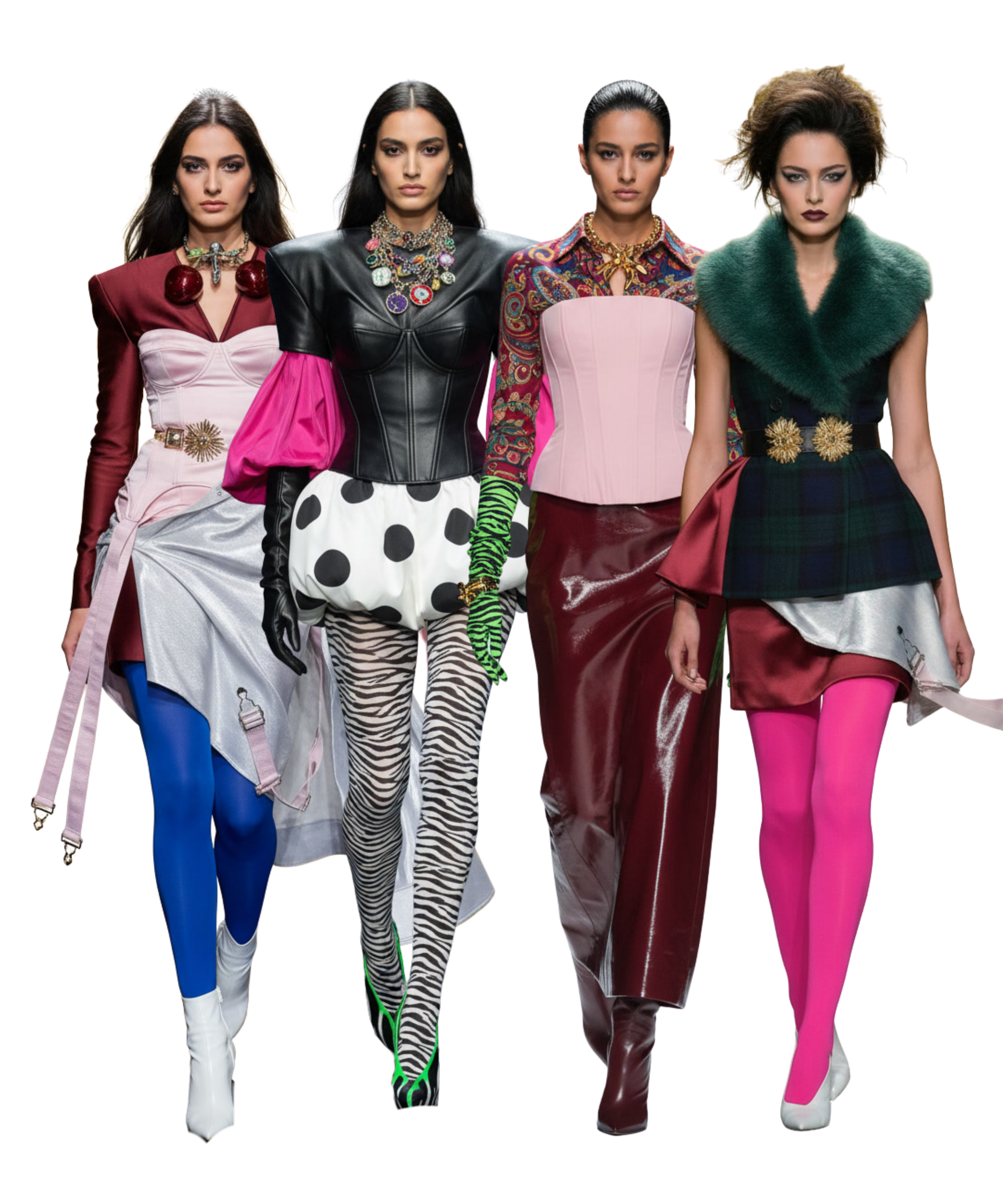
Apparently, dressing maximalist at work is now empowering. Not just fun. Not just expressive. Empowering. And it’s all over Instagram—sometimes overtly (cue the #maximalism, #maximalistfashion), sometimes more implicitly: overly bold colors, grotesques silhouettes, visual excess framed as confidence, freedom, and taking up space. The pitch goes like this: bold colors, big silhouettes, visual excess = taking up space. Restraint is internalized patriarchy. Editing yourself is fear. Loud is liberation.
It sounds great. It also sounds like it was written for social media—not for actual jobs. There’s a reason this narrative resonates. It taps directly into a very modern pressure: the expectation that women must not only succeed, but visibly live their best lives while doing so. Not just competent. Not just respected. But expressive, fulfilled, aesthetically optimized at all times.
Maximalism offers an easy visual shorthand for that fantasy. Color equals confidence. Excess equals freedom. If you look bold, you must be bold. It’s an attractive story—especially in a culture that confuses self-actualization with self-display. But aspiration is not the same thing as strategy. Let’s cut through the noise.
Visibility is not power (but it photographs better)
Maximalism delivers one thing exceptionally well: attention. Power, unfortunately, runs on something else entirely. Power is not how you enter a room. Power is precision. It’s knowing exactly how something will land—and being able to afford it. Being noticed is not the same as being listened to. Being looked at is not the same as being deferred to. Being visually memorable is not the same as being trusted. If your outfit occupies the entire room at the expense of your ideas, congratulations: you’ve succeeded at branding, not authority.
Feeling bold ≠ having agency
Yes, you may feel powerful in a cobalt suit with architectural sleeves and five competing accessories. You’ve done something. You’ve made a statement. Well done. Now watch the hidden cost: managing reactions, pre-empting commentary, neutralizing assumptions, and proving you’re serious despite the look. That’s not agency. That’s admin. That’s extra mental load—voluntarily added.
Power doesn’t dress loud. It dresses edited.
Across industries, cultures, and decades, power has a tell. It’s not beige. It’s understood. One deliberate note, not twelve. The ability to withhold rather than perform. Maximalism is expressive. Power is curatorial. Confusing the two is a category error—with very aesthetic consequences.
It’s not radical. It’s lazy.
Throwing on a pile of color, volume, and “statement” pieces is easy. It’s the fastest way to pop. It requires very little judgment beyond more. More color. More shape. More noise. That’s not bravery. It’s shortcut thinking.
Building authority through appearance is harder. It’s quieter. It lives in the details: calibration, proportion, timing and knowing exactly how far to go—and stopping there.
