The 2026 Upper Body Reset

What’s out. What’s in. And why dressing from the waist up for work just got harder.

From left, clockwise, from SS2026 runways: Givenchy, Celine, Prada, Bottega Venetta, Chanel, Balenciaga, Bottega Venetta, Fendi.
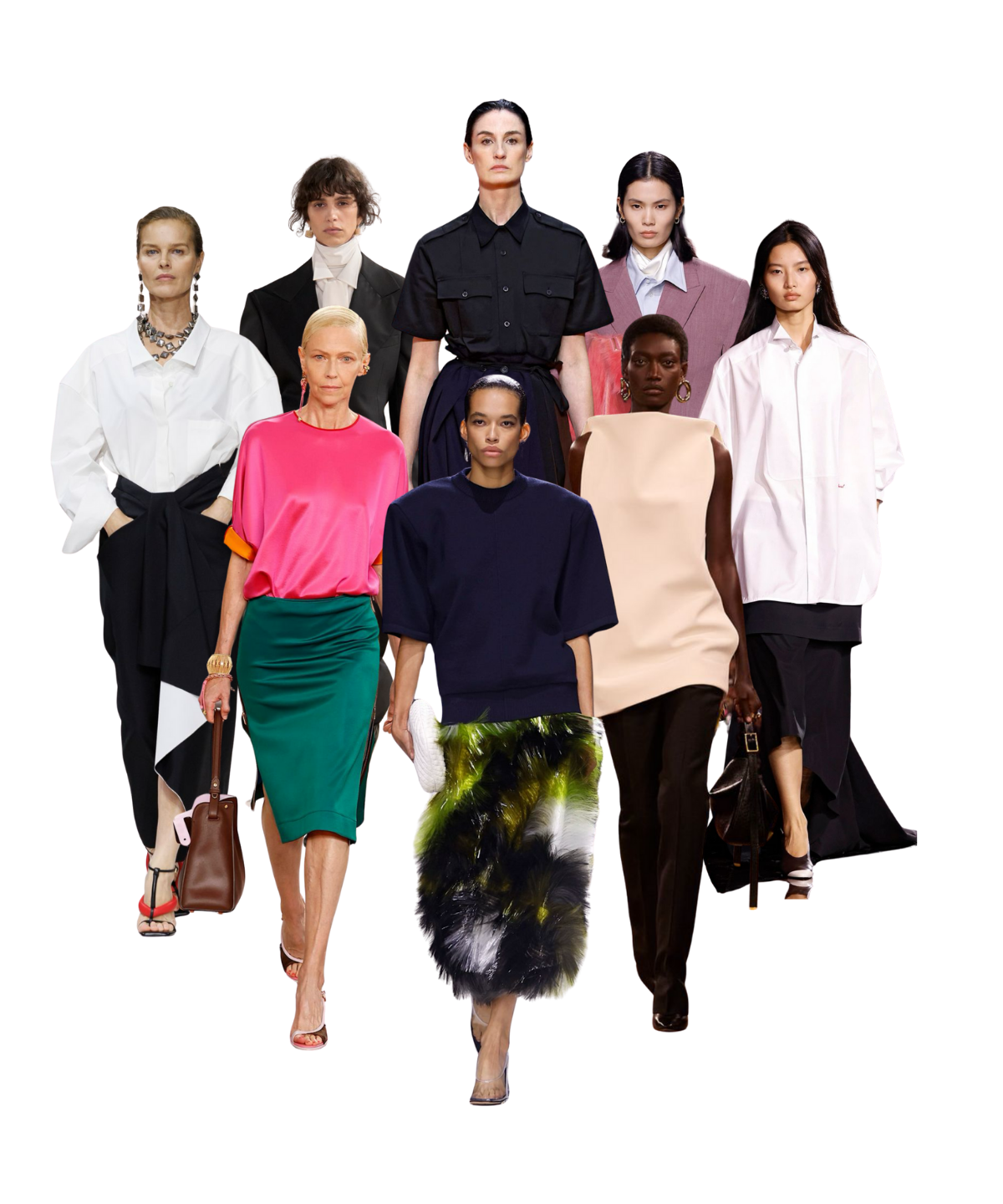
January 7, 2026. In early 2026 runways, something has quietly but decisively shifted: the upper body has stopped doing the work it used to do. The traditional blouse is no longer the cornerstone of professional dressing, or at least not in the easy way it used to. Instead, designers are redefining how authority, polish, and intent are expressed from the waist up.

And if you’re dressing for professional settings, this matters — immediately.

Semi-Out (or rapidly losing relevance): the blouse as your safety net.

Classic collared blouses, a highly reliable and dare we say versatile workwear staple in the fall of 2025, are now rarely worn the simple way they were intended. Still featured by Italian houses, when they appear, they are almost always styled with pencil skirts (Valentino and Gucci) and rigid tailoring, offering little flexibility. Collarless blouses have not replaced them. Some blouses with deconstructed or “misplaced” ties and bows do appear so there’s still some room to play with the blouse concept. But the result is: fewer “easy” tops that automatically read as effortlessly stylish and office-appropriate.

What replaced it: Not another blouse. A different attitude to the upper body.

In: austere shirts

What’s replacing blouses are more minimalist, androgynous silhouettes. Austere shirts inspired by menswear and uniforms (Chanel, Celine, Givenchy, Bottega, Prada), often layered over turtlenecks (Celine, Dior, Bottega), dominate the runways.

These tops are closed, flat, and deliberately unemotional. They don’t soften. They don’t explain. They don’t negotiate.

In: the turtleneck as a visible layer

Across SS2026 runways, the turtleneck reappears not as a standalone knit, but as a deliberate underlayer. Worn visibly beneath shirts, blazers, and even tailoring (notably at Celine, Prada, Dior, Bottega Veneta), it closes the neckline entirely and reinforces the upper body’s new neutrality. This is not about warmth. It’s about control. For work dressing, this matters because it further removes reliance on the top to communicate ease or polish: the turtleneck doesn’t decorate the outfit — it disciplines it. More on the turtleneck in our brief here.

In: straight and boxy, from cropped tops to hip-length

Seen everywhere on the SS2026 runways, from Chanel, Fendi, Balenciaga, Givenchy, Prada, are also boxy or straight-cut tops — from cropped to hip-length —, which replace fluidity with structure. These pieces are intentionally closed, neutral, and restrained, with no waist and no built-in feminity, shifting attention away from the upper body as a site of expression.

In: scarves and deconstructed or misplaced ties

In SS2026, scarves and bows take over some of the work traditionally done by open necklines and soft blouses. Scarves introduce movement and a more relaxed line at the neck, even when worn over rigid shirts, turtlenecks, or tailoring (notably at Celine). Bows, when placed high and flat on stiff collars (as seen at Dior), add definition and focus at the neck without softening the garment itself. Together, these elements allow variation at the neckline while keeping the upper body closed and structured. For work dressing, they offer a way to avoid bare or overly rigid necklines — adding interest and ease without reverting to blouse logic.

In (in smaller doses): engineered shape

The only real deviation from this austerity comes through engineered shape. In SS2026, a limited number of tops introduce interest through construction rather than softness: arching sleeves, sculpted volume, crisp seaming, and directional draping. In all cases, the shape is designed, not expressive — the drape is built in, the volume held, the line intentional. These tops don’t reintroduce ease or fluidity to the upper body; they offer a controlled inflection within an otherwise closed system. For work, they read as designed statements.

The nuance: interest didn’t vanish — it moved

For work dressing, this changes the equation. Minimalist tops no longer provide built-in polish. Instead, the overall outfit must carry clarity through proportion, tailoring, and finishing details. Bottoms, shoes, and accessories now play a more decisive role in establishing authority.

Another key development is how interest is added back into the look. Rather than coming from the garment itself, it’s increasingly introduced through styling: narrow bow ties at the neck, scarves loosely layered over shirts and blazers to break severity without reopening the neckline, and statement jewelry paired with simple tops. In 2026 workwear, jewelry and accessories are no longer optional — they are structural.

What this means for dressing for work

The takeaway for professional dressing is clear: workwear is becoming less forgiving, but more intentional. The focus has shifted from finding the “right blouse” to building a coherent, well-balanced look where every element has a role. The bottoms’ cut, length and volume matter more than ever, those shoes need to speak louder and jewelry and accessories subtly take more space. Minimalist, androgynous tops don’t fail because they’re boring. They fail when the rest of the look stays generic.

Understanding these shifts is essential for navigating office style in 2026 — and for making modern work outfits feel authoritative rather than severe.

We’ll break down how to handle each of these new upper-body plays — and what they demand from the rest of the outfit — next.

Previous
Previous

Brown + Pale Pink: The Warm Neutrals Upgrade

Next
Next

The Tailored Black Dress